Balance & fall prevention
Gait work, ankle and hip strength, reaction training and real-world practice on the stairs, curbs and rugs your client actually uses.
Best for: recent near-falls, unsteadiness, fear of walking outdoors.

Every client gets a single trainer and a written program. These are the four directions most programs take — most people end up with a blend.
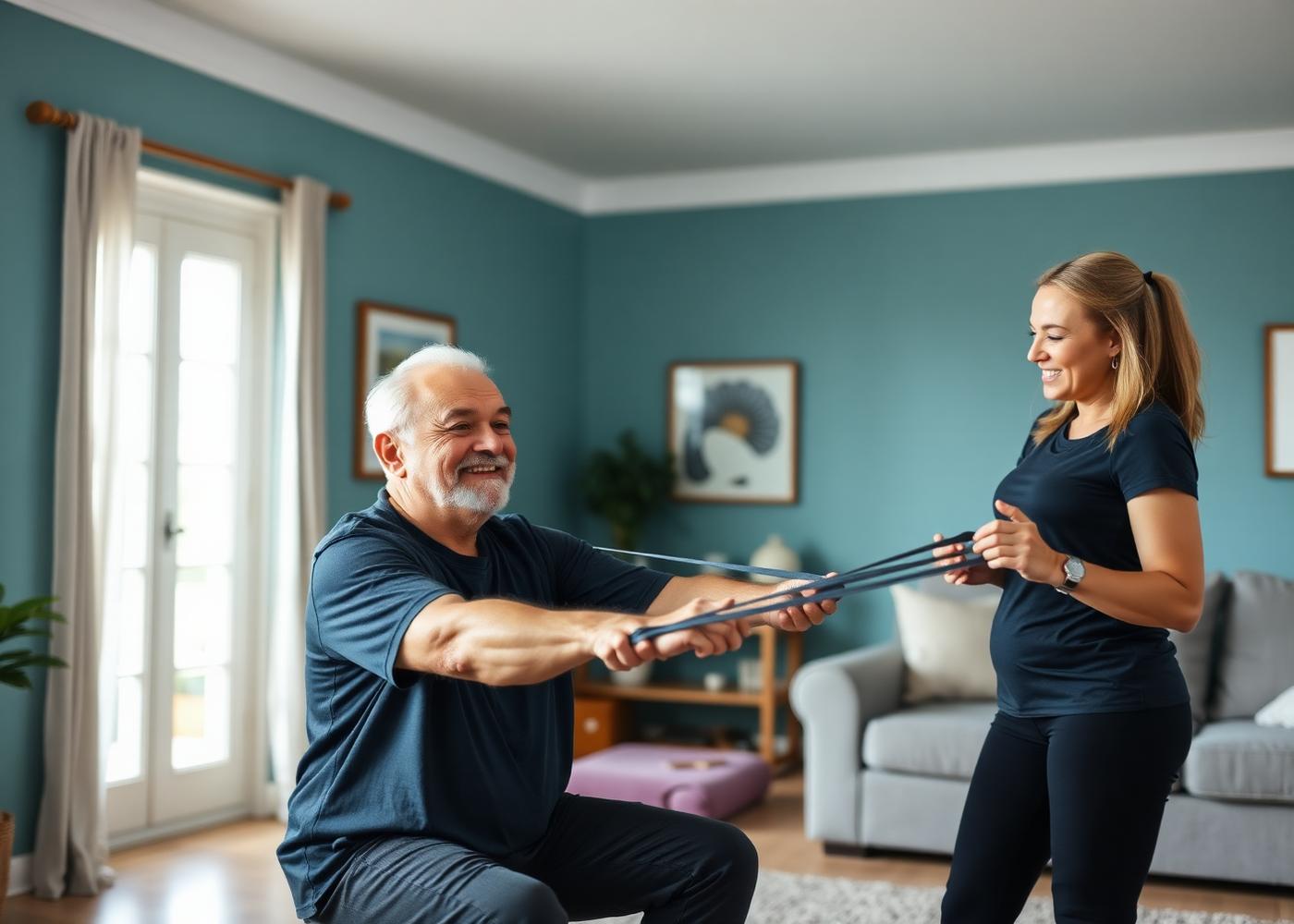
Gait work, ankle and hip strength, reaction training and real-world practice on the stairs, curbs and rugs your client actually uses.
Best for: recent near-falls, unsteadiness, fear of walking outdoors.
Picking up where physical therapy stops. We coordinate with discharge notes and rebuild the strength needed for independent days.
Best for: after hip or knee replacement, hospitalization, or PT discharge.
Chair-based strength, range of motion and circulation work for clients with limited standing tolerance or wheelchair use.
Best for: assisted living residents and clients with low endurance.
Cueing-based movement for Parkinson's, post-stroke recovery and MS — big movements, rhythm and dual-task practice.
Best for: Parkinson's, stroke recovery, neuropathy.
The trainer comes to the apartment, house or condo. Nothing to drive to, no gym to navigate, no equipment to buy.
Available across all Northern Chicago neighborhoods.
Scheduled blocks inside assisted living and independent living buildings, with collective progress reporting for the manager.
Best for: facilities serving multiple residents.
First 10 minutes. Check-in on sleep, pain, medication changes and anything that happened since the last visit.
Next 35–40 minutes. The program: warm-up, strength or balance work, and one functional task rehearsed in the real environment.
Last 10 minutes. Cool-down, homework for the week, and the trainer writes the session report with photos before leaving.